Last updated on August 21st, 2024 at 09:17 am
If you ever find yourself wondering what to eat in Vietnam, consider yourself lucky because the answer awaits at every corner. Undoubtedly, Vietnamese cuisine stands out as one of the finest in Asia. Vietnam, known for its rich food culture, is a paradise for culinary enthusiasts. The vibrant food scene is an integral part of our culture, and we, as passionate food lovers, are spoiled for choice. Below is a list of the top
Here’s a list of the most beloved popular Vietnamese dishes you will love.
Mì Quảng
Mì Quảng, which translates to “noodles from the land of Quang,” is a dish with its roots in the Quang Nam province and the city of Da Nang in Vietnam.
While Phở is globally recognized as one of the most famous Vietnamese dishes, Mì Quảng is a delicious noodle dish that distinguishes itself. Typically served with wide flat noodles accompanied with a small amount of broth, subtly infused with turmeric. The fillings for Quang-style noodles in Da Nang are made from a diverse range of ingredients. The most common are chicken, pork, shrimp, frog, quail eggs, or snakehead fish. Mì Quảng is typically topped with peanuts and bánh tráng mè(crispy sesame rice cracker), served with aromatic herbs, a slide of lime and chili on the side.
I believe Mì Quảng truly deserves more recognition. I fondly recall walking to a nearby neighborhood to pick up Mì Quảng for my family’s breakfast when I was a child.
Bánh mì
The French introduced baguettes to Vietnam in the 19th century, and the Vietnamese took it to the next level. This unique Vietnamese sandwich has now gained international popularity.
The traditional banh mi comes with various ingredients like pate, Vietnamese mayo, pork sausage (chả lụa), and pork floss, along with coriander, cucumber, pickled carrots, and chili. Nowadays, the variety of fillings for bánh mì has expanded to include options like crispy roasted pork, chicken, BBQ pork, or pork meatballs.
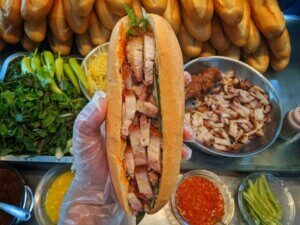
Viet people often have to start our day fairly early and we normally don’t prepare breakfast at home, just grab a banh mi on the way to work or school. We love to pair Bánh mì with strong Vietnamese coffee as our combo to start a day. Banh mi can be found anywhere in Vietnam, from a street outlet to a bakery.
If you are in Ho Chi Minh, check out what to eat in Viet Nam/ Ho Chi Minh via: this post
Phở
Wherever there’s a Vietnamese community, you’ll likely find steaming bowls of Phở anywhere in the world. The flavor of Phở varies slightly by region, so don’t miss out on trying authentic Phở when you’re in Vietnam.
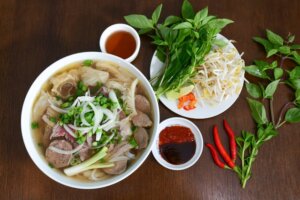
Pho is a popular dish for breakfast or lunch. Pho’s ingredients include flat rice noodles, sweet broth made of simmering beef bone cooked for hours, and spices(star anise, coriander seeds, cinnamon stick, cloves, fennel seeds, and cardamom).
Phở bò (Beef pho): rare beef slice
Phở đặc biệt (special Pho): which contains various types of beef cuts including beef steak, beef brisket, tender, beef ball, and tripe.
Phở gà (chicken Pho); is made of chicken broth, noodles, and chicken slices.
On the side Fresh herbs: bean spouts, basil, a slice of lemon, Sauce: hoisin sauce, and chili/siracha sauce. Garnish, Spring onion,Red onion
Nothing is more comforting than a hot steam bowl of Pho in the cold weather of Hanoi. Each spoonful warms not just the body but also your soul.
Seafood
If you are a seafood lover, trying the tasty seafood in Vietnam is an absolute must.
When I moved to Australia, I noticed that Aussies enjoy their seafood in much more simple ways, like grabbing some fish and chips for a quick takeaway, grilled barramundi with veggies on the side for lunch, or digging into boiled prawns with seafood dressing. Aussies also like raw oysters with a splash of lemon juice.
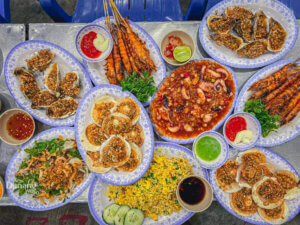
Even though I like seafood in Australia, I yearn for the unique and diverse ways we cook seafood in Vietnam, full of spices and various cooking methods.
The seafood menu is sure to leave you in awe with its diverse range of dishes. From Crab with tamarind sauce (cua rang me) and sun-dried squid to Grilled Scallops with Garlic Butter, Stir-fried Spicy Lemongrass Snails, Snakehead Fish Hot Pot, Grilled Oysters or lobster, steamed fish, and seafood salad. You can enjoy a supreme grand seafood feast at a very reasonable price. The best seafood in Vietnam is found in coastal cities like Da Nang, Nha Trang, or Phan Thiet.
Da Nang is one of the best places to tuck into Vietnamese seafood dishes thanks to its waterfront position.
Bánh xèo
Every time I visit home from Au, my parents prepare homemade bánh xèo, a dish that’s not only my favorite but was also beloved by my late grandma. She always looked forward to it when she came to Da Nang from the countryside.
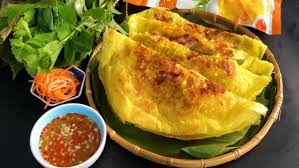
Bánh xèo, a savory crepe, is a popular dish in central and northern Vietnam. The name ‘bánh xèo’ comes from the sizzling sound made when the wheat flour batter hits a hot frying pan, which is phonetically translated as “xèo” in Vietnamese, “banh” means crepe or cake
Bánh xèo is filled with a variety of ingredients including meat, bean spout, and prawn, served with herbs, lettuce, and fish sauce or peanut sauce. (rice paper is also provided at some restaurants)
How to eat Bánh xèo:
Place half(or tear a piece) of the bánh xèo on the lettuce or rice paper, add herbs, roll it up, and then dip it in the dressing sauce.
Bánh bèo
Bánh bèo is indeed a beloved dish originating from Hue, a city that once served as the capital of Vietnam. Bánh bèo is also a specialty of other towns central Vietnam, such as in Da Nang, Quang Nam, and Quang Ngai. The foundation of bánh bèo lies in its batter, a balanced combination of rice flour and tapioca flour. This blend is crucial as it yields the characteristic tender yet slightly chewy texture that makes bánh bèo distinct.
The filling of the cake is very diverse, depending on the region, there are different types of fillings such as peanuts, meat, pork fat, crispy fried shallots, finely ground shrimp, dipped in the sweet and spicy fish sauce-based dipping sauce the final touch.
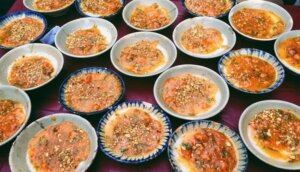
Bánh bèo can be enjoyed as a snack, appetizer, or light meal and is a popular offering in both street food stalls and restaurants throughout Vietnam. Our love for food is huge, and we’re always on the lookout for something tasty.
I’ve got this sweet spot for the Bánh bèo I used to grab from the market across my place for an afternoon snack.
It’s one of those memories that stick because, in Vietnam, amazing food is just a short walk away, no matter where you are. That easy access to incredible eats is something I miss and love about life back home.
Goi cuon
Goi cuon (rice paper roll) is a Vietnamese delight adored by food lovers globally, known for its tasty, light, and healthy profile.
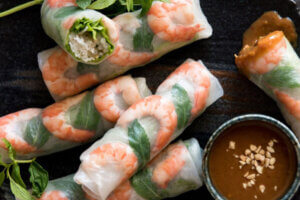
Rice paper-wrapped dishes are popular throughout North, Central, and South Vietnam.
Made with rice paper, it’s rolled with aromatic herbs, green banana, vermicelli, and various meats such as pork, chicken, and shrimp, served with delicious sauces. There are diverse dipping sauces to choose from, listed peanut sauce or tangy sweet and sour fish sauce to rich hoisin sauce, elevate the flavors, often topped with peanuts.
Bun cha
If you find yourself in Hanoi, there’s an unmissable local dish called Bun Cha. This delightful Vietnamese cuisine features charcoal-grilled pork exuding a smoky aroma, served alongside vermicelli noodles and pickled vegetables. It’s accompanied by a sweet-sour fish sauce and a medley of fresh herbs like basil, mint, coriander, lettuce, and sometimes perilla leaves. The combination of the grilled pork and these ingredients results in a harmonious blend of flavors that’s truly unforgettable.
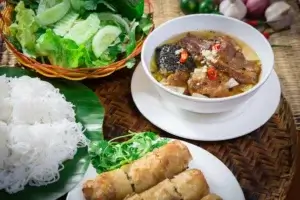
The star of Bun Cha is the grilled pork, which comes in two forms: small, seasoned pork patties (cha) and thin slices of marinated pork belly. Another crucial component is the dipping sauce, a concoction of fish sauce, vinegar, sugar, and water, often enhanced with garlic, chili, and lime. This sauce is tangy, sweet, and slightly spicy, perfectly complementing the smoky pork.
Bun Cha gained international fame when former U.S. President Barack Obama enjoyed it during his visit to Hanoi with chef Anthony Bourdain. However, long before this, it was a staple in Hanoi’s culinary scene.
Bánh tráng kẹp
“Bánh tráng kẹp” might not be as well-known to foreigners since it’s rarely served abroad, unlike phở. This snack, also referred to as “bánh tráng nướng,” is a favorite among Vietnamese people and can differ from one region to another.
The main ingredients that contribute to the deliciousness of “Bánh tráng kẹp” often include rice paper, quail eggs, scallions, dried beef, and more. After the preparation, they will be grilled on a charcoal grill.
“Bánh tráng kẹp” wins the hearts of many thanks to its heavenly dipping sauce. The sauce for rice paper is quite simple, made either with dried beef or enhanced with a bit of spicy satay.
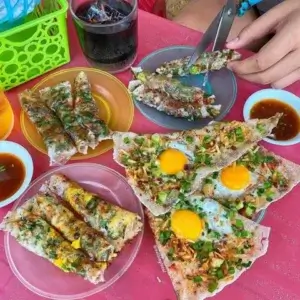
Freshly grilled, these rice paper treats are still warm, and delightfully crispy, with a touch of richness from various toppings like pate, quail eggs, and scallion oil. Dipped in a savory, slightly spicy, and fragrant dried beef sauce, they become an irresistible temptation, leaving food enthusiasts craving and fondly remembering the experience.
Bánh tráng kẹp is the perfect snack for catch-up moments with your mates
In the late afternoon, it’s not uncommon to see groups of friends or colleagues cheerfully inviting each other,
Similar to how people in Australia enjoy hanging out with their mates over beers, in Vietnam, we sometimes gather with friends over this delightful snack. “Let’s go eat ‘bánh tráng kẹp,’ shall we?” questions asked after a long day at work/school among Viet youngsters.
Bánh cuon
Banh cuon is a traditional Vietnamese dish known for its light, delicious, and appealing nature. It consists of thin, light pancakes made from rice flour and water steamed to create soft and smooth rolls.
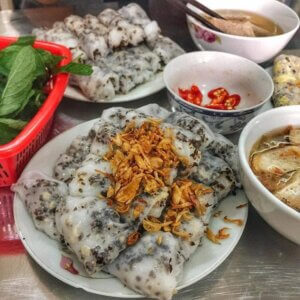
The filling typically includes finely minced pork, wood ear mushrooms, and various seasonings. The rolls are delicately wrapped, presenting an elegant and inviting appearance. Bánh cuốn is commonly served with a sweet and sour fish sauce and fresh herbs.
Bánh cuốn is a ubiquitous dish throughout Vietnam, but Hanoi excels in crafting the best bánh cuốn. Banh Cuon is a go-to breakfast for numerous Hanoians due to its affordability and speedy service. If you happen to be in Hanoi, I strongly suggest trying Banh Cuon nong (hot rolled rice flour pancake) served immediately after preparation. Starting your day with fresh, hot Banh Cuon on a quiet Hanoi morning is just the best.
If you are up for a challenge
For those who love to explore authentic Vietnamese cuisine when traveling to Viet Nam and are ready for a culinary adventure, Bún đậu mắm tôm and Trứng vịt lộn
offer an unforgettable experience for adventurous taste buds.
Must-Try food in Viet Nam/What to eat in Viet Nam
Bun dau mam tom
This dish is not only a culinary delight but also a cultural experience, representing the bold flavors that Vietnamese cuisine is known for.
The main elements of bún đậu mắm tôm include
Mắm tôm( fermented shrimp paste): fermented shrimp paste, sugar and lime. Although the smell of shrimp paste can be off-putting to first-timers, it is an indispensable part of the bún đậu mắm tôm dish.
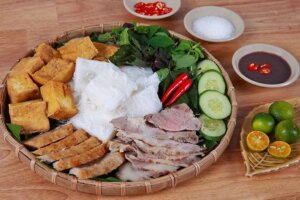
Bun (Rice Vermicelli): Soft, thin rice noodles serve as the base for the dish, providing a light and neutral foundation for the bold flavors that follow.
Đau (Tofu): The dish features fried tofu, contributing a delightful crispy texture. The tofu absorbs the flavors of the accompanying condiments and sauces.
In addition, other ingredients might sound unfamiliar to some but add to the dish’s richness:
- Doi sun (Pork Cartilage Sausage): A unique sausage made with pork cartilage, providing a distinct crunch.
- Chả mực (Grilled Squid Sausage): Sausage made of pork and squid, offering a savory and seafood-infused element.
- Cha com (Green Rice Sausage): Made mainly from com (young green rice), lean meat, and pork skin. Chả cốm has a unique taste, capturing the essence of young rice during harvest season.
On the plate of bún đậu mắm tôm, you’ll often find a platter of fresh herbs such as lettuce, cucumber, banana blossom, star fruit, fragrant herbs, and pickled green papaya. These fresh and crunchy elements enhance the overall texture and flavor profile.
Trứng vịt lộn (balut duck eggs)
Balut, a popular and nutritious street snack in Vietnam, can be quite shocking to many around the world who can’t fathom eating an egg with a developed embryo inside.
The most common way to eat balut is to boil/steam it and enjoy it with Vietnamese basil, dipped in a mixture of salt and pepper.
To eat balut like a pro, first, tap the top of the egg to create a small opening. Peel back the shell at this spot, revealing the broth inside, which is savored first. Then, continue to peel the egg and sprinkle a bit of salt, pepper, and a squeeze of lemon juice for added flavor.
In central Vietnam, it’s also common to dip balut in fish sauce mixed with ginger and chilies. Remember, using basil to cover the egg helps if you’re a bit squeamish about the embryo’s appearance. Enjoy the unique combination of textures and flavors like a local!
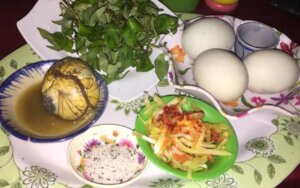
Tip: If you’re hesitant to try boiled balut, you can choose an easier option with balut stir-fried with tamarind sauce. The tamarind flavor might help alleviate any apprehension about eating balut.
If you’re feeling adventurous with your food choices, trying balut is an excellent opportunity to step outside your comfort zone.
Travel to Vietnam and not sure what to eat in Viet Nam? Food lovers, this guide is your key to exploring the amazing Vietnamese cuisine. From iconic Phở to savory Bún Chả, discover the rich flavors that make Vietnam a paradise for taste enthusiasts. I hope this Viet Namese food list will be helpful when you embark on a delightful food journey across my home country.Dont know where to go in Da Nang, this post is for you
Thanks for visiting my website.
Have a lovely day, folks 🙂
Chau